Imperial College waste collection tips for student clearouts
Posted on 31/07/2026

Imperial College Waste Collection Tips for Student Clearouts
If you are packing up after exams, moving out of halls, or helping a flatmate clear a room near Imperial College, waste management can turn into the least glamorous part of the week very quickly. Bags multiply, drawers hide random cables, and somehow there is always one broken chair nobody claims. These Imperial College waste collection tips for student clearouts are written to make that process simpler, calmer, and far less wasteful.
The goal is not just to "get rid of stuff". It is to clear responsibly, avoid last-minute panic, and keep usable items out of the bin where possible. That means planning the clearout, separating recyclables, understanding local collection expectations, and knowing when a professional service is the cleanest solution. Let's face it, move-out day is stressful enough without discovering you have three black sacks, a mattress, and a printer at 10:45 p.m.
Below, you will find practical steps, common mistakes, a comparison of options, and a realistic example of how a student clearout can be handled efficiently in South Kensington and the wider Kensington area.
Why Imperial College waste collection tips for student clearouts Matters
A student clearout around Imperial is rarely a neat, single-bin situation. You are usually dealing with a mix of paper, packaging, damaged furniture, old bedding, kitchen clutter, and things nobody wants to carry on the Tube. If you leave it until the final day, the whole job becomes slower and more expensive than it needs to be.
Good waste collection habits matter for three simple reasons. First, they keep hall exits and shared corridors clear, which helps everyone move out without bottlenecks. Second, they reduce the risk of leaving behind rubbish that could lead to charges or awkward emails after you have gone. Third, they help you recycle more and dump less, which is the sensible thing to do, really.
It also matters because student clearouts often happen at the worst possible time: end-of-term, hot weather, half-packed rooms, tired people, and a stack of boxes in the hall. You do not need perfection. You do need a plan.
For students living a little further out, the local context matters too. Areas like South Kensington, Kensington, and the streets around transport hubs can be tight, busy, and not exactly forgiving if you have left a sofa on the pavement waiting for a miracle. In that sort of setting, timing and packaging matter almost as much as the disposal method itself. If you are curious about the local area and why it works so well for students, the article on the charming enclave of Kensington London gives useful background.
How Imperial College waste collection tips for student clearouts Works
The process is straightforward when broken into stages. A student clearout is usually a combination of sorting, bagging, separating recyclable items, and choosing the right disposal route for each category. That sounds obvious, but the difference between a smooth clearout and a chaotic one is often just those small decisions made early.
In practice, the workflow looks like this:
- Sort everything by type. Keep paperwork, textiles, electronics, furniture, and general rubbish separate.
- Identify reusable items. Books, kitchenware, clothing, and small appliances often have a second life.
- Set aside anything requiring special handling. Batteries, broken electronics, paint, and similar items should not be treated as ordinary rubbish.
- Bag and label the rest. Clear bags are useful for quick visual checks, and labels help if flatmates are sharing one exit point.
- Book the disposal method that fits the volume and timing. Small loads may suit a standard waste collection, while larger room clearouts may need a more complete clearance service.
If you are working in a shared flat, do one more thing: agree on what belongs to whom before anything leaves the room. It is surprising how quickly a "shared" toaster becomes a point of tension. No one needs that drama at the end of term.
For bigger jobs, it is worth reading about the broader service options on the site, especially the practical overview in services overview and the details on recycling and sustainability. Those pages help explain how different loads are usually handled and why sorting properly saves time.
Key Benefits and Practical Advantages
A well-run student clearout saves more than time. It changes the whole feel of move-out day. Instead of rushing from room to skip to staircase and back again, you move once, do things properly, and finish with fewer headaches.
- Less stress on the day: Sorted items are easier to move and easier to dispose of.
- Better recycling outcomes: Paper, plastics, glass, and metals are much easier to separate before everything becomes one mixed pile.
- Reduced clutter in halls and shared spaces: This matters in busy student buildings where corridors can fill up fast.
- Lower risk of avoidable charges: Leaving rubbish in the wrong place or missing a collection window can be expensive and inconvenient.
- More responsible disposal: Useful items can be donated, reused, or passed on instead of sent straight to waste.
There is also a time-saving benefit that students sometimes underestimate. A clear bag of sorted recycling is easier to lift, easier to transport, and easier for a collection team to process. That sounds minor until you are on your third trip downstairs and the lift is busy. Then it feels very important indeed.
And if you are comparing disposal options, the article on rubbish clearance costs in SW7 is helpful for understanding where value tends to come from, especially when time is tight and you do not want hidden extras creeping in.
Who This Is For and When It Makes Sense
This approach is useful for a wide range of student situations, not just a full room empty-out. If you are at Imperial College and any of the scenarios below sound familiar, the tips in this guide will save you effort.
- End-of-term clearouts: You are leaving accommodation and need to remove everything quickly.
- Inter-term moves: You are changing rooms, moving flats, or downsizing for the summer.
- Group flat departures: Several people are moving out at once, and the volume of waste is higher.
- After a room refresh: You have bought replacements and need to dispose of old furniture or broken bits.
- International departures: You need a clean, fast exit and cannot keep items in storage for long.
It also makes sense if you are dealing with a mix of old and new belongings. For example, one student may be taking a laptop and books home, while another is leaving behind a desk, a broken lamp, and a pile of packaging. Different items need different handling, and one plan rarely fits all.
For anyone living or studying close to the college, the local street layout can matter as much as the rubbish itself. If access is awkward or the building is busy, a service that understands narrow roads and timed collections can be a very practical choice. The same kind of thinking applies in transport-heavy areas too; a good read on rubbish removal near South Kensington Station shows why timing and access are such a big deal in this part of London.
Step-by-Step Guidance
Here is a simple way to run a student clearout without losing the plot halfway through.
1. Start with a room sweep
Go shelf by shelf, drawer by drawer. Do not begin with the obvious pile in the middle of the floor and assume that is the whole job. It rarely is. Check under beds, in desk drawers, behind the door, and in wardrobe corners. You will almost always find one thing you forgot about. Usually socks. Sometimes chargers.
2. Make four categories
- Keep for items going with you.
- Donate or pass on for usable items.
- Recycle for paper, card, cans, bottles, and suitable packaging.
- Dispose for broken, damaged, or non-reusable items.
This is the easiest way to stop "everything in one bag" syndrome, which is very tempting when you are tired. But mixed waste slows everything down.
3. Deal with bulky items early
Mattresses, desks, chairs, shelving, and old suitcases are the things that cause problems later. Move them first if possible, while the room still has space to work in. If you wait until the end, they block exits and make the rest of the clearout feel twice as hard.
4. Pack recycling properly
Flatten cardboard, empty bottles, remove food residue where practical, and keep recyclables dry. Damp cardboard is a small thing, but it turns a tidy job into a messy one very quickly.
5. Book collection at the right time
Where a collection service is needed, do not leave booking until the final evening. If you know your move-out date, schedule the disposal early enough to leave buffer time. If you are in a rush, same-day help may be available in some cases; the article on same-day waste collection in South Kensington explains what to consider before relying on a fast turnaround.
6. Do one final empty-room check
Look inside cupboards, window ledges, bedside tables, and under sinks. A surprising amount of small waste gets left behind because people stop checking once the room looks mostly empty. It looks done. It is not done.
Expert Tips for Better Results
In our experience, the fastest clearouts are not the ones where people move quickly. They are the ones where people decide clearly. That is the bit that matters.
- Use clear bags where possible: They make it easier to spot contamination and keep recycling separate.
- Keep one "essentials" box: Put your passport, chargers, keys, bank cards, and documents somewhere safe before anything else starts moving.
- Photograph bulky items before collection: This can help you remember what was agreed if you are sharing the job with flatmates or a landlord representative.
- Break down items where safe: Flat-pack furniture is easier to handle when dismantled carefully.
- Use one staging point: Stack items in a single corner or near the exit so you are not walking around the room constantly.
- Think in "loads", not "bags": For a student clearout, volume is often what decides the best disposal method.
Another useful habit is to keep a small "maybe" pile. If you are unsure whether to keep something, put it aside and revisit it after the main sort. Ten minutes later, the decision is usually clearer. Funny how that works.
And for anything fragile or awkward, especially furniture or office-style items from shared study spaces, it can help to understand how careful handling is done in a structured clearance. The page on furniture disposal is a good reference point if your clearout includes desks, chairs, or shelving.
Common Mistakes to Avoid
Most student clearout problems are completely avoidable. They happen because everyone is busy, tired, or assuming someone else has already sorted it.
- Leaving everything until move-out day: This is the big one. It always creates pressure.
- Mixing recyclables with general waste: Once mixed, everything becomes harder to process.
- Forgetting about shared responsibility: In flatshares, rubbish can become a group problem very quickly.
- Dumping items in the wrong place: Hallways, pavements, and entrances are not temporary storage zones.
- Not checking what can be reused: Books, kitchen items, and clothing often have value for someone else.
- Underestimating bulky waste: One chair may seem harmless. Three chairs, a bed base, and a mattress is another story entirely.
A slightly less obvious mistake is not thinking about costs until the last minute. That is where people get caught out. If you want a realistic sense of price differences and why quotes vary, have a look at hidden charges in rubbish removal. It is the sort of reading you only need once, ideally before you book anything.
Also, do not assume every collection is a "small job". A few bags and a broken chair might be, but a whole room clearout often becomes larger once you actually start sorting properly. That is normal.
Tools, Resources and Recommendations
You do not need a fancy toolkit. A few simple things are enough to make the job smoother.
- Strong bin bags or clear sacks: Good for general waste and recycling separation.
- Marker pens and labels: Handy if several people are sharing a clearout space.
- Cardboard boxes: Best for books, cables, kitchenware, and donations.
- Gloves: Useful when handling dusty items, old storage boxes, or awkward rubbish.
- Tape and scissors: Helpful for breaking down packaging and flat-pack furniture.
- Donation bag: Keep one bag or box just for reusable items so they do not get mixed in by accident.
For planning around local waste collection expectations, the council rules article can help you understand what tends to be allowed, what usually needs special handling, and where students often go wrong: Kensington and Chelsea Council rubbish disposal rules. That does not replace checking your own situation, of course, but it gives a sensible overview.
If you are weighing up a broader removal service rather than handling everything yourself, it can also help to review the company's approach to safety and payments. The pages on insurance and safety and payment and security are useful trust signals when you are comparing options.
Law, Compliance, Standards, or Best Practice
For student clearouts in London, the safe approach is to follow recognised waste best practice and avoid leaving items in places where they create hazards or block access. That includes keeping communal routes clear, separating recyclable material where practical, and using approved disposal methods for anything that should not go into ordinary household waste.
There are a few plain-English principles worth remembering:
- Do not leave waste on pavements or shared building entrances. Even if it looks temporary, it can create access issues and complaints.
- Keep hazardous or special items separate. Batteries, electronics, chemicals, and damaged electrical items should be treated with extra care.
- Avoid fly-tipping at all costs. If you hand waste to the wrong person or place it somewhere unofficial, you may still be linked to the problem.
- Use traceable, professional help when needed. If you are not sure how a large load should be handled, it is better to ask than guess.
For businesses, shared buildings, and larger student facilities, the standards are even more important because access, safety, and building management all matter at once. If your clearout is moving beyond a single room or flat and starts resembling a larger premises job, it can be useful to read the overview of office clearance to see how structured clearance work is typically approached.
Best practice is simple: sort properly, store safely, and remove waste promptly. The boring advice is usually the good advice, honestly.
Options, Methods, or Comparison Table
Not every student clearout needs the same solution. A few bags of mixed waste, a broken chair, and a stack of books can each point you toward a different method. Here is a simple comparison to help you decide.
| Method | Best for | Pros | Watch-outs |
|---|---|---|---|
| Self-sorting and local disposal | Small volumes, light items, simple recycling | Low cost, flexible, good for reusable items | Time-consuming, awkward for bulky waste, more trips |
| Shared flat clearout | Multiple students moving out together | Efficient if organised well, easy to divide labour | Disputes over ownership, mixed waste, missed items |
| Professional waste collection | Fast removal of mixed or bulky waste | Convenient, less lifting, usually quicker | Costs vary, needs accurate load description |
| Full clearance service | Large room or flat clearouts, multiple bulky items | Most hands-off option, good for time pressure | Not always necessary for small jobs |
If you are in a straightforward situation, self-sorting may be enough. If the room is full, the deadline is close, or access is awkward, a professional option starts looking more sensible. And if the load includes larger items, the guide to house clearance can help you understand the kind of support that suits fuller move-outs.
Case Study or Real-World Example
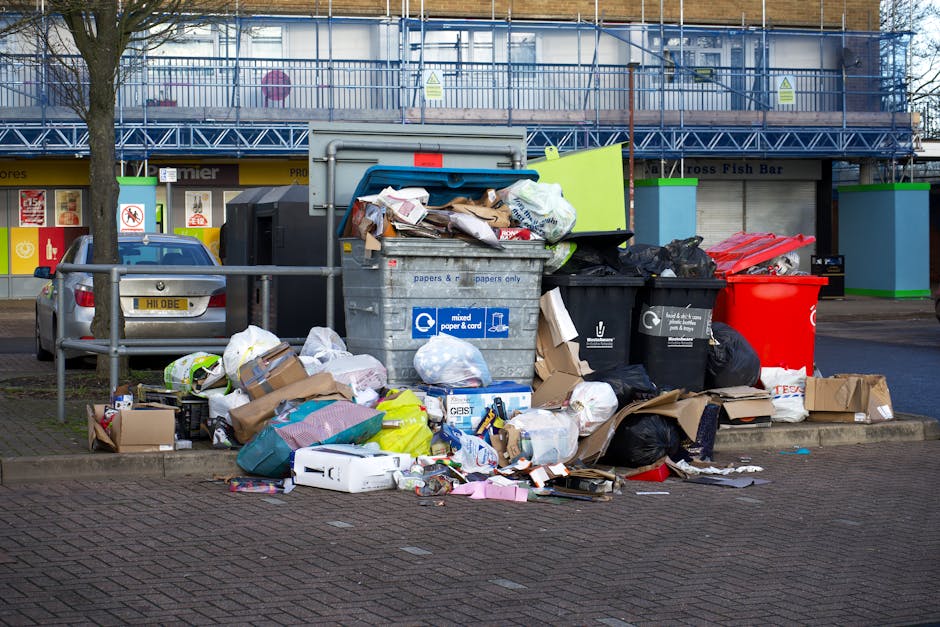
Here is a realistic example from a typical end-of-term clearout scenario. A student in shared accommodation near Imperial had one room to empty, plus a few shared items in the kitchen area. The room contained books, clothes, packaging, a desk chair, two broken lamps, a printer, and a surprising amount of half-used stationery. Classic end-of-term chaos.
The first step was sorting into four piles: keep, donate, recycle, dispose. Clothing and textbooks went into one box, recyclables were flattened and grouped, and broken electrical items were separated from general waste. The desk chair and lamp were identified as bulky items early, which helped stop them from becoming obstacles later.
Instead of trying to deal with everything in one go, the student and flatmates booked the removal once they had measured the load properly. That mattered, because the clearout turned out to be a little bigger than it first appeared. Not huge, but enough to justify planning ahead. The result was a calmer move-out, fewer trips through the building, and no awkward last-minute scramble at the entrance.
The small lesson? The moment you stop guessing and start sorting, the whole thing gets easier. It really does.
When access or timing becomes tight, reading about rubbish collection for tight streets is especially useful. It shows how location can affect collection logistics, which is exactly the sort of thing students forget until the hallway is already full of bags.
Practical Checklist
Use this checklist the day before or morning of your clearout.
- Separate keep, donate, recycle, and dispose items.
- Empty drawers, cupboards, under-bed storage, and wardrobe corners.
- Flatten cardboard and pack recyclables cleanly.
- Set aside batteries, electronics, and anything requiring special care.
- Identify bulky furniture early.
- Label shared items clearly if you live in a flatshare.
- Keep important documents and valuables in one safe bag or box.
- Check hallways and exits so you are not blocking shared spaces.
- Confirm collection timing before move-out day.
- Do a final room sweep before handing back keys.
For a few students, the final key step is simply knowing when to stop doing it yourself. If the job suddenly looks bigger than expected, or if access is awkward and time is running short, getting help may be the cleanest way forward. That is not overreacting. That is being realistic.
Conclusion
The best Imperial College waste collection tips for student clearouts are not complicated. Sort early, separate what can be reused, keep bulky items under control, and choose the right disposal route before the deadline bites. A little planning turns a messy, stressful room empty-out into something manageable, even oddly satisfying.
What students usually need is not more theory. They need a simple sequence that works in a real room, with a real timetable, and a real amount of clutter. Do that, and the whole process becomes less of a scramble and more of a reset.
If you want a better idea of how a wider local removal service can support your clearout, the site's waste collection page is a useful next stop for understanding the practical side of getting items removed properly and on time.
Get a free quote today and see how much you can save.
And once the bags are gone and the room is finally empty, take a breath. That quiet moment is usually the nicest part.

 Tipper Van - Rubbish Removal and Waste Disposal Prices in South Kensington, SW7
 Luton Van - Rubbish Removal and Waste Disposal Prices in South Kensington, SW7


